

Local Celebration of National Pollinator Week
go.ncsu.edu/readext?171417
en Español / em Português
El inglés es el idioma de control de esta página. En la medida en que haya algún conflicto entre la traducción al inglés y la traducción, el inglés prevalece.
Al hacer clic en el enlace de traducción se activa un servicio de traducción gratuito para convertir la página al español. Al igual que con cualquier traducción por Internet, la conversión no es sensible al contexto y puede que no traduzca el texto en su significado original. NC State Extension no garantiza la exactitud del texto traducido. Por favor, tenga en cuenta que algunas aplicaciones y/o servicios pueden no funcionar como se espera cuando se traducen.
Português
Inglês é o idioma de controle desta página. Na medida que haja algum conflito entre o texto original em Inglês e a tradução, o Inglês prevalece.
Ao clicar no link de tradução, um serviço gratuito de tradução será ativado para converter a página para o Português. Como em qualquer tradução pela internet, a conversão não é sensivel ao contexto e pode não ocorrer a tradução para o significado orginal. O serviço de Extensão da Carolina do Norte (NC State Extension) não garante a exatidão do texto traduzido. Por favor, observe que algumas funções ou serviços podem não funcionar como esperado após a tradução.
English
English is the controlling language of this page. To the extent there is any conflict between the English text and the translation, English controls.
Clicking on the translation link activates a free translation service to convert the page to Spanish. As with any Internet translation, the conversion is not context-sensitive and may not translate the text to its original meaning. NC State Extension does not guarantee the accuracy of the translated text. Please note that some applications and/or services may not function as expected when translated.
Collapse ▲June 27-28, 2007
Photos and text by Debbie Roos, Agricultural Extension Agent.
The Chatham County Center of North Carolina Cooperative Extension and North Carolina State University celebrated the first annual National Pollinator Week June 24-30 with two days of educational programs on Wednesday June 27 at Pittsboro’s Chatham Marketplace and Thursday June 28 at Weaver Street Market in Carrboro.
We held two days full of educational programs at both Chatham Marketplace in Pittsboro and Weaver Street Market in Carrboro.
Educational programs were interspersed with time in the bee cage, and members of the Chatham County Beekeepers’ Association (at Chatham Marketplace) and Orange County Beekeepers’ Association (Weaver Street Market) were on hand to help answer questions
For more information about National Pollinator Week, visit The Pollinator Partnership website.
Check out the News and Observer story about our event.
Chatham Marketplace in Pittsboro, NC
June 27, 2007
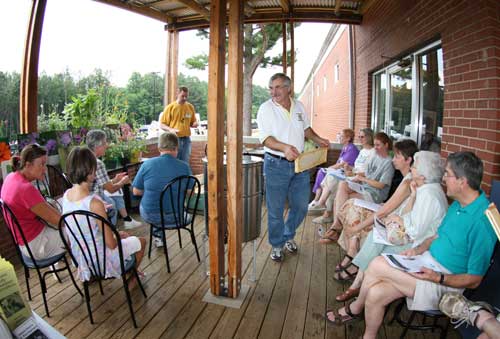
Chatham County Beekeepers’ Association president Jim Williams passes around a frame containing drawn out honeycomb for participants to get a closer look (and taste!). North Carolina State University Apiculture Specialist David Tarpy talks about how to become a beekeeper.
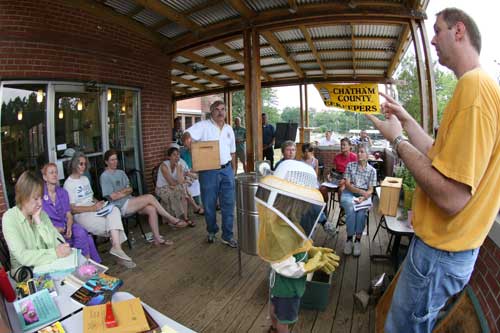
David Tarpy enlists the help of six year old Alec Beaton to model beekeeping protective gear.
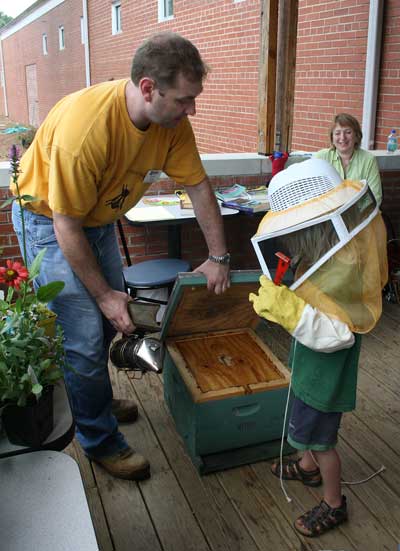
Alec prepares to “inspect” his hive!
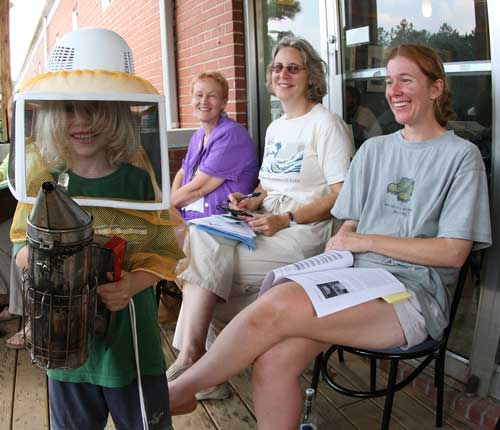
Once the veil was on his head, Alec had an ear-to-ear grin all the way through the presentation!
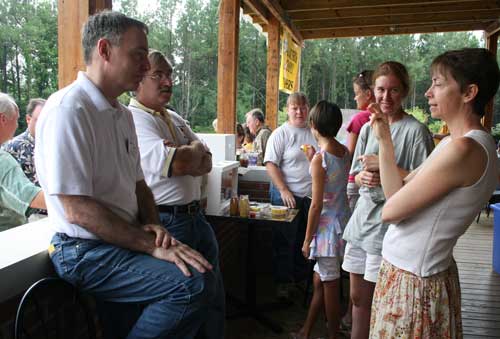
North Carolina State University entomologist Steve Bambara and beekeeper Jim Williams talk with participants. Steve gave a talk on pollinators in North Carolina.
Weaver Street Market in Carrboro, NC
June 28, 2007
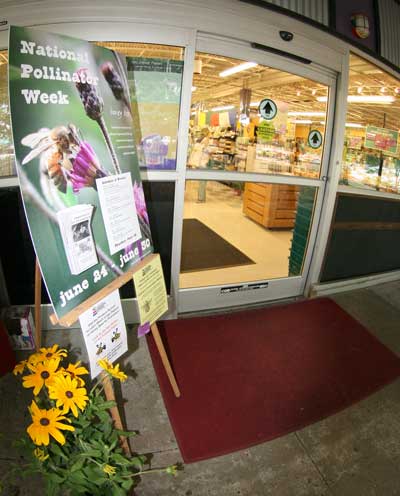
I provided photos and text to Linda Fullwood, Weaver Street Market’s Marketing Director, and she made posters promoting National Pollinator Week.
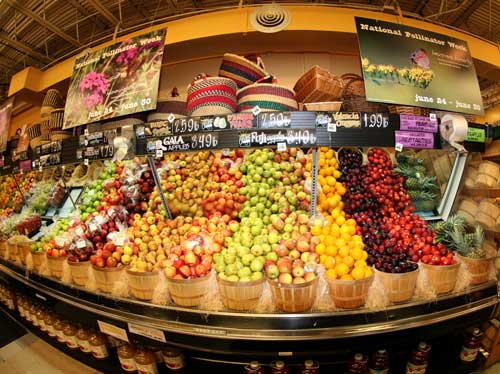
Multiple posters provided facts about various pollinators. These were displayed aorund the store for two weeks prior to the event.
Both Weaver Street Market and Chatham Marketplace also developed special displays of the many products of the hive available at each store, including honey harvested by local beekeepers!
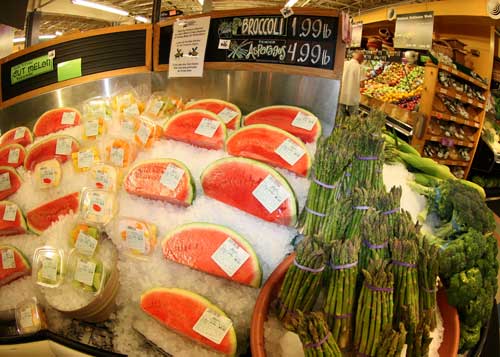
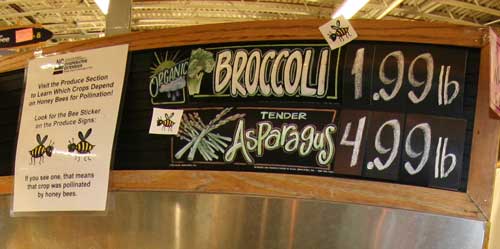
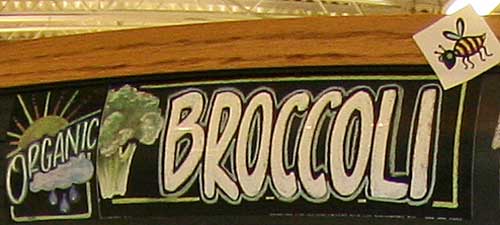
A close-up shot of the bee sticker.
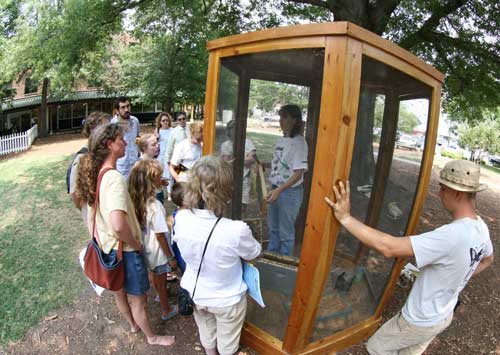
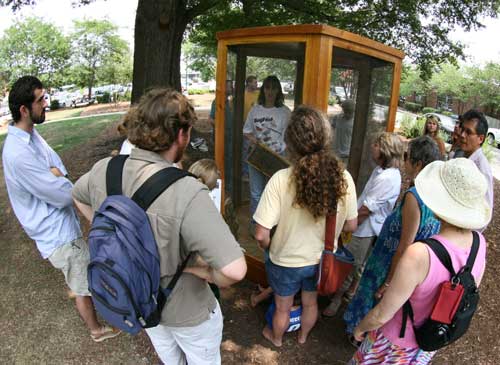
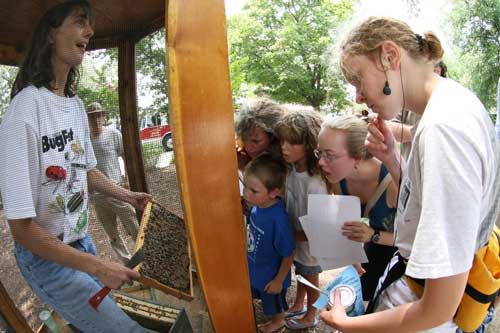
Talk about a rapt audience! These visitors can’t take their eyes off of the fascinating bees.
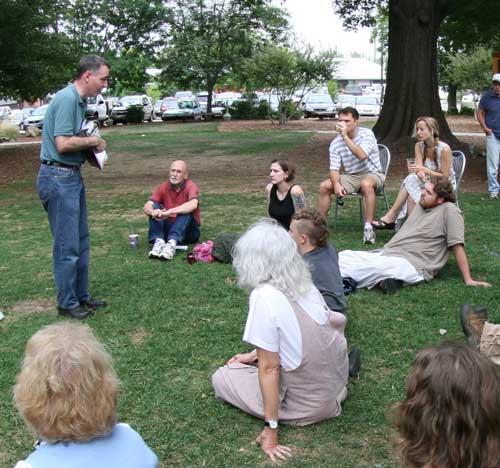
Steve Bambara talks about various North Carolina pollinators.
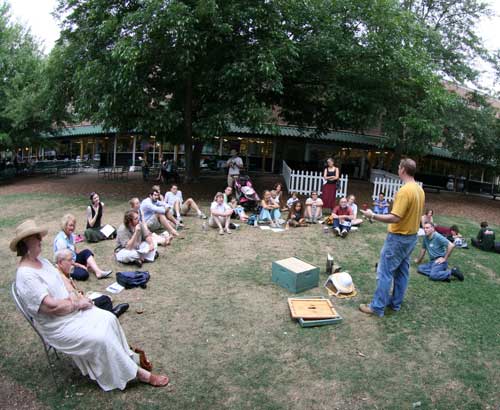
David Tarpy gives another talk about beekeeping on the Weaver Street Market lawn.
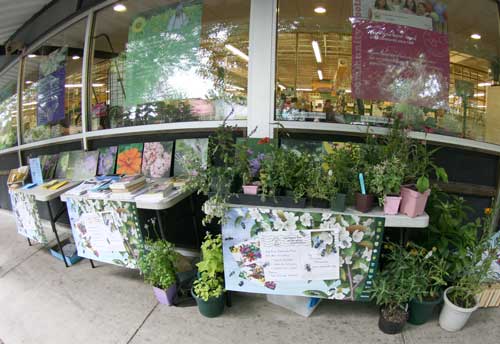
I gave talks on how to plant a pollinator garden and brought examples of great native plant species that attract native bees, honey bees, and other pollinators. We also distributed literature and posters.
I am developing a Pollinator Conservation Guide for the Growing Small Farms website. I have spent the past year researching plants that will provide forage for native bees and honey bees and are adapted for the Piedmont. I have taken hundreds of photos of these plants as well as pollinators. I am now slowly building the website and will phase it in over time.
Did You Know…?
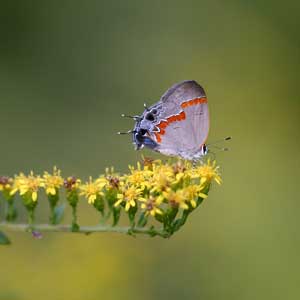
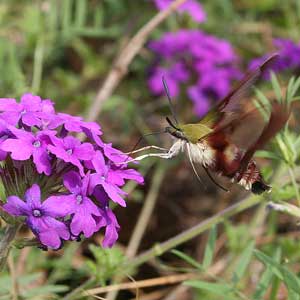
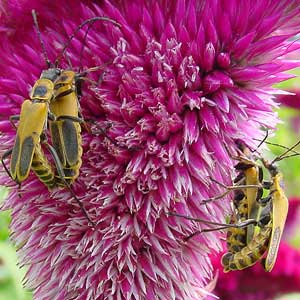
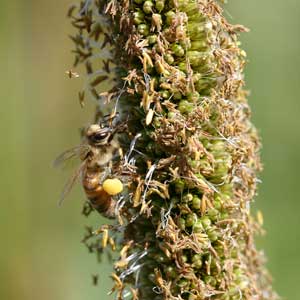
About 75% of all flowering plant species need the help of animals to move their heavy pollen grains from plant to plant for fertilization. Most pollinators are beneficial insects such as flies, beetles, wasps, ants, butterflies, moths, and bees. A small percentage of pollinators are vertebrates such as hummingbirds, bats, and small mammals such as mice.
Pollinators are essential components of the habitats and ecosystems that many wild animals rely on for food and shelter. As landscapes are converted from wild to managed lands, many pollinators’ habitats may be destroyed or fragmented. These changes can lead to the loss of wildflowers used by pollinators for foraging, nesting, and/or egg-laying.
Worldwide, approximately 1,000 plants grown for food, beverages, fiber, spices, and medicines need to be pollinated by animals in order to produce the goods on which we depend. Examples include blueberries, melons, chocolate, coffee, peaches, vanilla, almonds, apples, oranges, lemons, carrots, avocados, onions, broccoli, and much more!