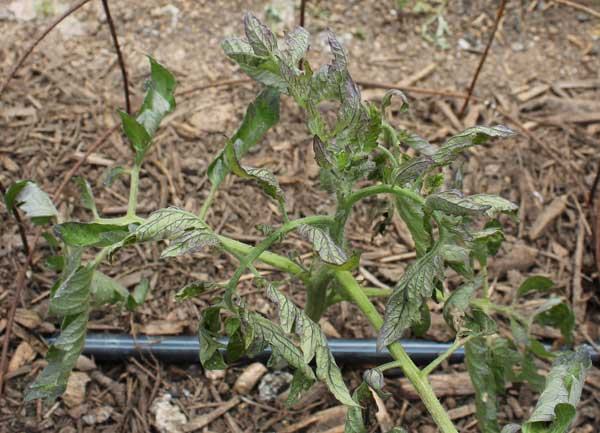
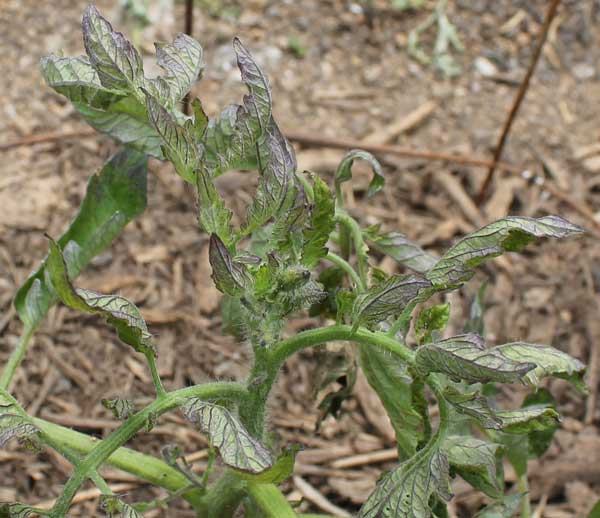
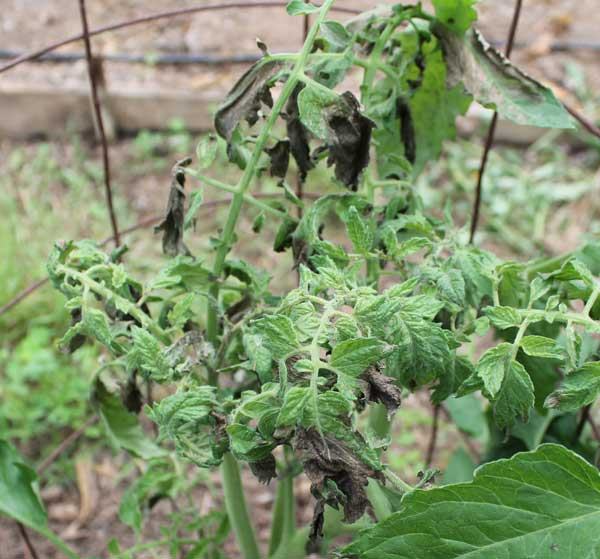
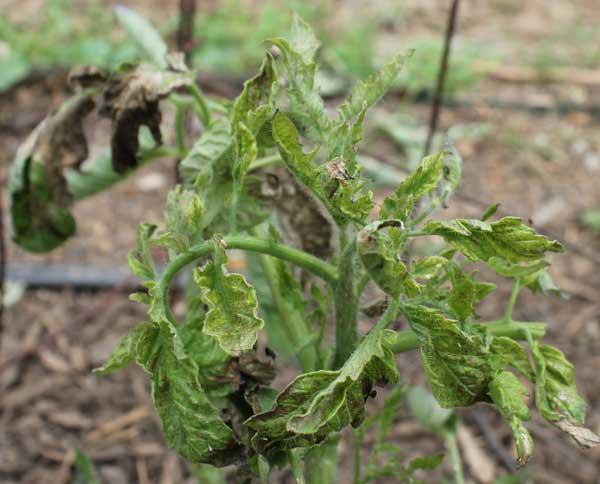
Tomato spotted wilt virus (TSWV) has reared its ugly head in Chatham County. The virus infected 'Green Zebra' tomatoes in a high tunnel at a Pittsboro farm.
From the NCSU Plant Disease and Insect Clinic's website:
TSWV is spread by a tiny insect called thrips. On tomatoes, symptoms may be expressed on leaves, petioles, stems, and fruit. Early symptoms include cupping and off-colored bronzed foliage. Later, leaves may show small, dark spots and eventually die. Dark brown streaks can be seen on stems and petioles. Plants may be severely stunted and new growth can be deformed. Sometimes the plant may exhibit one-sided growth. The tops of the plants may turn yellow and wilt. Fruit can have rings and appear mottled.
Early infections usually have the most severe impact on yield because they prevent flowering and fruit set. Infected plants do not recover and should be removed.
Control of TSWV is difficult. In a field setting, it is important to manage weeds adjacent to the field because these weeds harbor both the thrips vector and the virus during the winter. Infected plants should be removed and destroyed as soon as symptoms appear. TSWV resistant varieties are available and can be effective. Organic growers and other larger acreage growers may want to consider reflective mulches to cover their beds rather than the traditional black mulch. In greenhouses, thrips populations should be eliminated so they, along with TSWV, are not spread to the field when seedlings are transplanted.
Learn more about tomato spotted wilt virus.