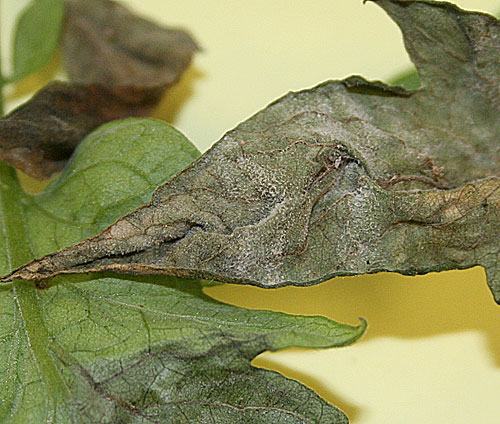
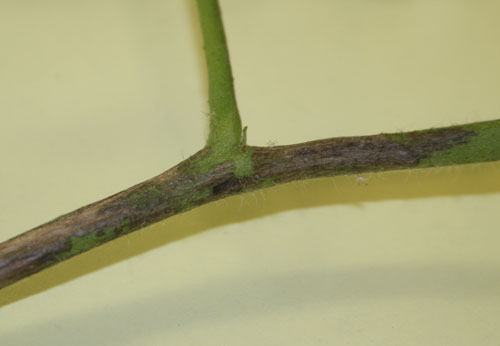
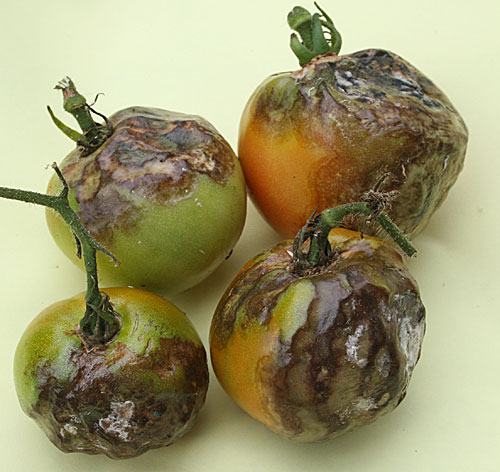
The past month or so we have been hearing reports of the devastation late blight (
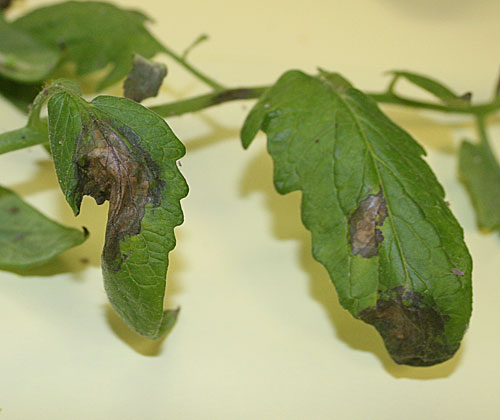
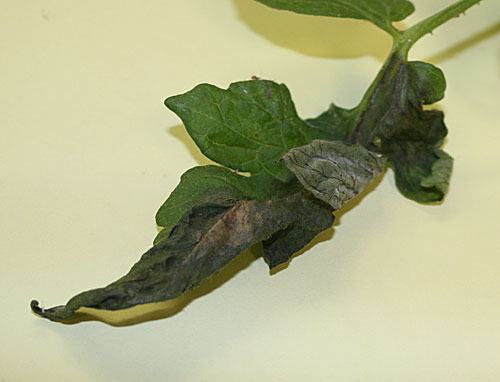
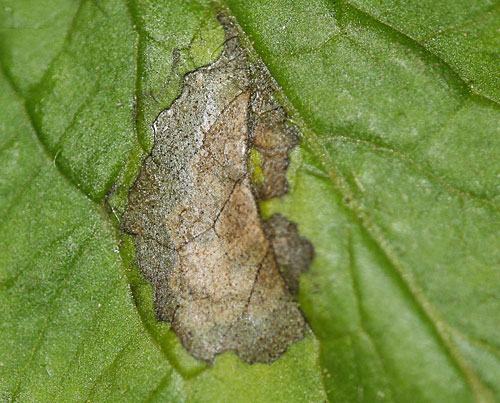
Phytopthora infestans) is causing on tomatoes in our mountain counties this year. This morning I received a specimen in my office from a local gardener and immediately thought: "uh-oh" - this sure looks like late blight to me. In my 10 years here I have never seen it, as it typically is only found in the western part of the state. I took some photos and sent the sample off to the NCSU plant clinic for confirmation. I asked
Dr. Kelly Ivors, one of our NCSU plant pathologists, to look at my photos and she concurred that it is definitely late blight.
So...I hate to be the bearer of bad news, but we now have late blight in the Triangle area. How did this happen? Late blight showed up earlier than usual in the mountains and disease pressure has been heavier than normal in that region (more afternoon rains than usual). In the piedmont we have had below normal temperatures recently which favors blight. The late blight here in our area likely traveled on air currents from the mountains.
If you still have tomatoes in the field and were planning on harvesting for another few weeks, you should start scouting your fields every 2-3 days to look for signs of late blight. Dr. Ivors said that late blight can devastate a field in as little as three days once it hits. To prevent fruit rot, she recommends harvesting all possible harvestable fruit once late blight is detected at moderate levels.
Organic products that are labeled for late blight on tomato include Serenade®, Sonata®, Oxidate®, Sporan®, Sporatec®, and copper products. These products work preventatively; if late blight has been detected in your area,
DON'T WAIT UNTIL YOU SEE SYMPTOMS TO SPRAY.
Dr. Jeanine Davis, our NCSU organic specialist based in western North Carolina, has worked closely with the organic growers battling late blight in tomato. Here is what Dr. Davis has to say about their experience managing late blight organically in western North Carolina:
The key to using these products [copper, Serenade, Sporatec, etc.] successfully is they must be applied BEFORE you have an infection. So if you are going to spray, now is the time to start. Also, you need to get excellent coverage of the foliage. A powered mist blower works great. Also, spray frequently. If you spray and it rains an hour later and washes it all off, spray again. We are on a five day spray schedule with our organic tomato research plots right now. And alternate products. We are using copper every other spray right now. The organic growers here who went on a five day spray schedule with a good power mist blower, used copper every other spray, and alternated that with Sporatec, Serenade, and/or Sonata seemed to hold it back pretty good. The amount of control was very variety dependent. Some growers included an Oxidate spray in there, too. At the research station we've been using Serenade + copper for one spray and then Sporatec + Neem in the next. It's done a pretty good job for us.
Dr. Davis continues: Please remember to read the labels for any product you spray, and pay attention to any REIs (restricted entry intervals) and PHIs (preharvest intervals). For example, following copper sprays, you are not to re-enter the field for 24 hours unless wearing the specified PPEs (personal protective equipment). Also remember not to work your plants when they are wet, and clean your tools and picking buckets. Do everything you can not to spread disease from plant to plant. If you already have some infection, remove affected leaves and keep spraying. As always, check with your certifier about any restrictions on product use and timing!
The cool, wet weather forecasted for the next several days for our area will provide optimal conditions for the spread of late blight.
NCSU Plant Pathologist
Dr. Jean Ristaino is working to genotype late blight strains in North Carolina to understand how the disease migrates across the state. She is interested in collecting disease samples. Please
contact her at 919-515-3257 if you have a tomato late blight sample that you would be willing to "share"!
For more information:
Tomato Late Blight - North Carolina State University
Late Blight on Tomato - Cornell University - GREAT field photos!
Organic Management of Late Blight - Cornell University
Organic Management of Late Blight of Potato and Tomato (Phytophthora infestans) - eXtension
Organic Management of Late Blight of Potato and Tomato with Copper Products - eXtension
Guidelines for Managing Specific Vegetable Diseases Organically - Cornell University
Products for Managing Diseases in Organic Vegetables - Cornell University
Growing Heirloom and Heirloom-type Tomato Hybrids in Organic and Conventional Production Systems - North Carolina State University