July 7, 2011
Debbie Roos, Agricultural Extension Agent.
Downy mildew has hit cucurbit crops on North Carolina farms. According to the CDM Epidemic Map, as of July 7 it has been confirmed in Alamance, Duplin, Hertford, Lenoir, Rowan, Sampson, and Wilson counties (and possibly others). Spores can travel for miles in wind and storms. Once downy mildew gains a foothold it is difficult to control. Photos from the 2009 outbreak are posted below.
Growers should start applying prophylactic sprays to cucurbit crops NOW.
Visit the North Carolina State University Cucurbit Downy Mildew website to learn more about this disease.
Control Strategies for Organic Growers
* Note: Powdery mildew and downy mildew are not the same disease so control strategies that work on one will not necessarily work on the other.
Because downy mildew can be so devastating to crops, growers are encouraged to monitor North Carolina State University's Cucurbit Downy Mildew website throughout the growing season and start applying prophylactic sprays to all cucurbits as soon as downy mildew is detected in the state. Once it is on your farm it is difficult to control organically.
Cultural strategies can help prevent downy mildew. Plant resistant varieties. Plant in locations with good air circulation. Use drip irrigation to minimize leaf wetness.
There are a number of OMRI-listed products purported to help control downy mildew in cucurbits: copper, neem, biofungicides (e.g., Serenade®), peroxides (e.g., OxiDate®), and bicarbonates (e.g., Kaligreen®). According to NCSU Plant Pathologist Dr. Frank Louws, research has shown that copper is the best organic option, but only on the crops that show little to no symptoms. He said if the infection is far along not to bother spraying because it wouldn't do much good. Spray early in the morning to avoid phytotoxicity problems caused by spraying in the heat of the day. If the disease is present on the farm, a prophylactic application of a copper product can be made to curcurbit crops that show mild or no symptoms. If the weather does not favor the disease (which likes it warm and wet and humid), then the copper is more likely to suppress the disease. In other words, the copper may help but it may not be enough.
Consult the Organic Disease Management Web Resources on the Growing Small Farms Website for more information about CDM and other diseases.
Control Strategies for Conventional Growers
Cucurbit Downy Mildew - North Carolina State University
Photos from the 2009 Outbreak in Chatham County
Cucumbers:
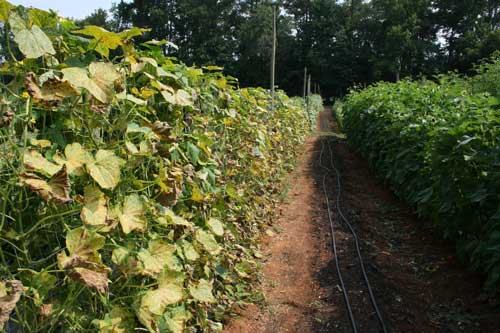
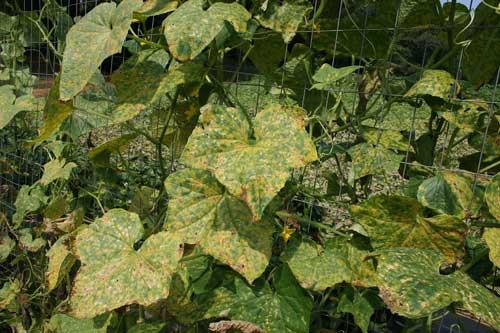
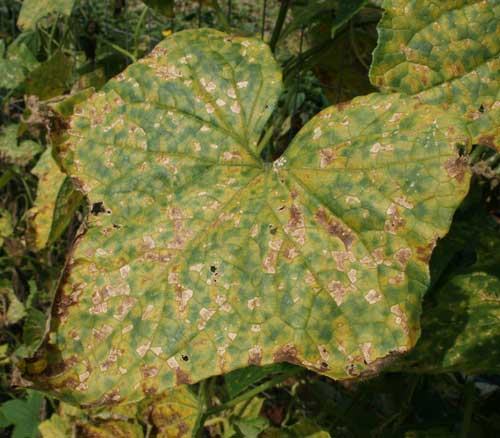
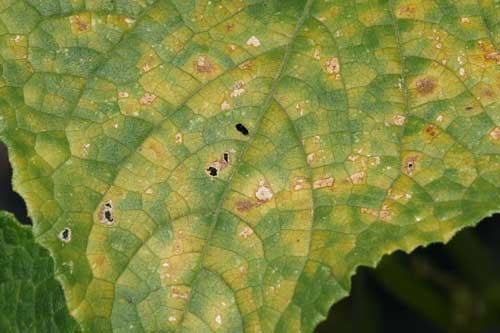
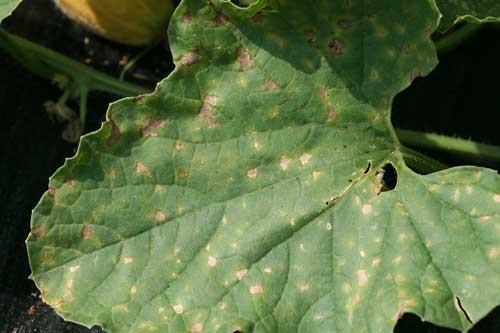
The leaf spots caused by downy mildew are yellow, angular, and restricted between the leaf veins. The interior part of the lesions often eventually turns brown. When the leaves are wet the white-gray fungus can often be seen in the lesions on the undersides of the leaves.
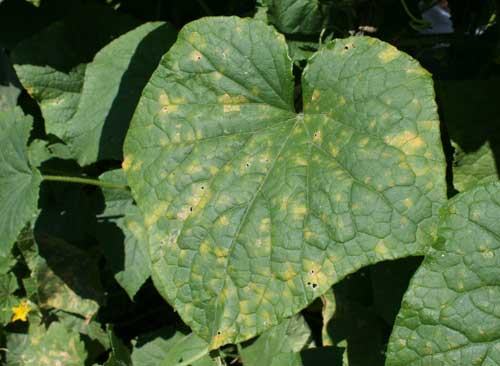
The 'Marketmore' cucumbers were also infected but the disease has not progressed as rapidly as it did in the 'National Pickling' variety.
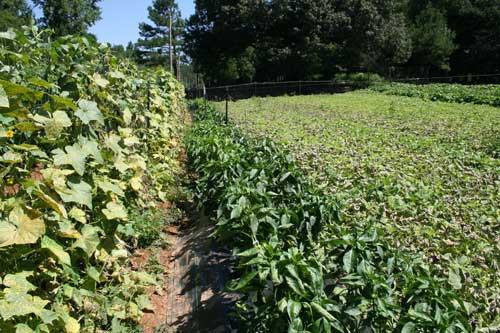
A row of peppers (untouched by the cucurbit disease) separates the cucumbers from the melons.
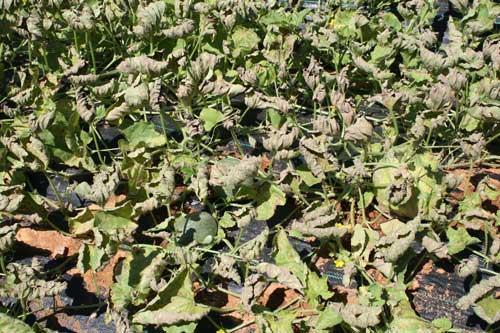
Cantaloupes: There was a sudden onset of symptoms in the 'Sweet Granite' cantaloupes during the second week of harvest - the field above looked fine on Saturday and by Monday all the rows were affected.
Downy mildew can cause leaf curling in melons (above).
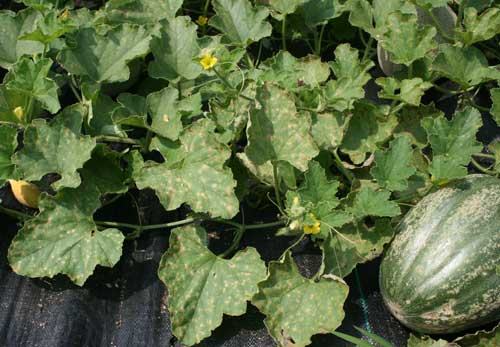
Infected melon leaves.
* These recommendations apply only to North Carolina. They may not be appropriate for conditions in other states and may not comply with laws and regulations outside of North Carolina. Certified organic growers should consult their certifier before using a new pesticide. Unless otherwise noted, these recommendations were current as of Jule 2009. Individuals who use pesticides are responsible for ensuring that the intended use complies with current regulations and conforms to the product label. Be sure to obtain current information about usage regulations and examine a current product label before applying any pesticide. For assistance, contact your county Cooperative Extension Service agent. The use of brand names and any mention or listing of commercial products or services in the publication does not imply endorsement by the North Carolina Cooperative Extension Service nor discrimination against similar products or services not mentioned.