|
July 15, 2009
Photos and text by Debbie Roos, Agricultural Extension Agent.
Cucumbers:
|
|
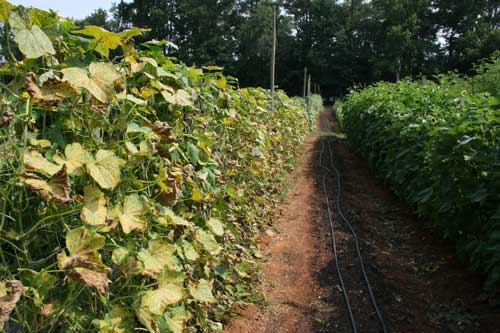
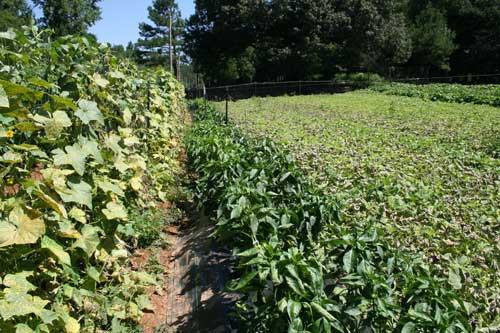
The symptoms progressed rapidly in cucumbers and started at the bottom of the vine. From the time the spotting is first noticed, two days later the entire planting is severely and uniformly affected. This variety is 'National Pickling'. Sunflowers grow on the right with bok choy recently seeded down the middle bed. |
|
The growers said they actually saw the symptoms progress upward in the course of just one day and that from a distance it looked like the row of plants was on fire because of the way they were turning yellow. |
|
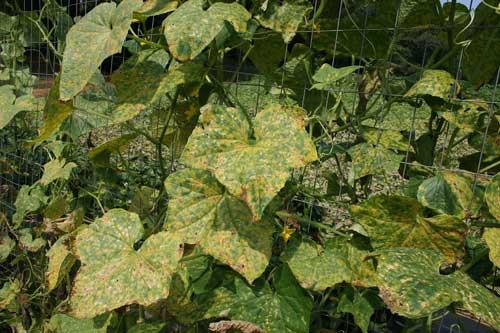
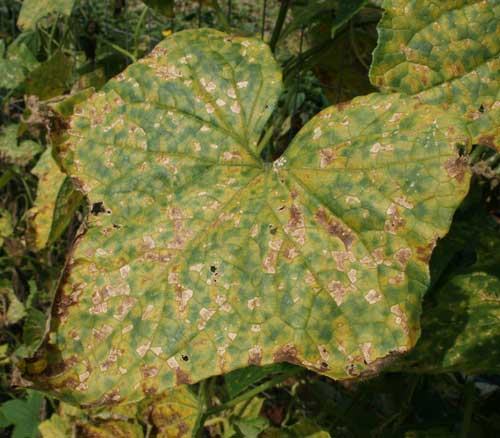
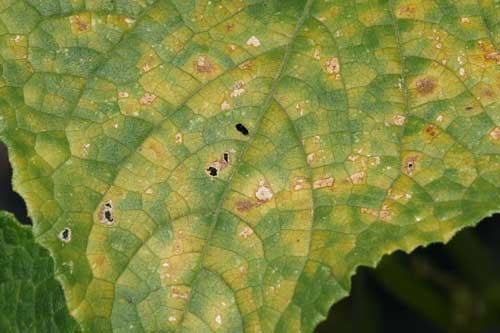
Close-up of an infected leaf. |
|
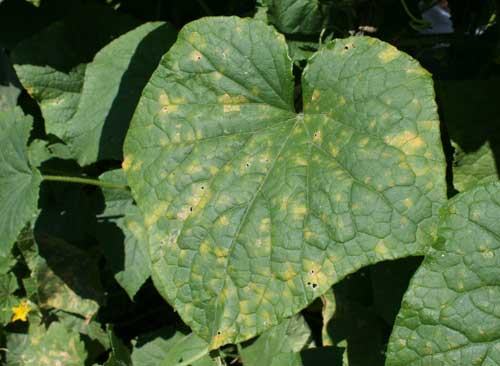
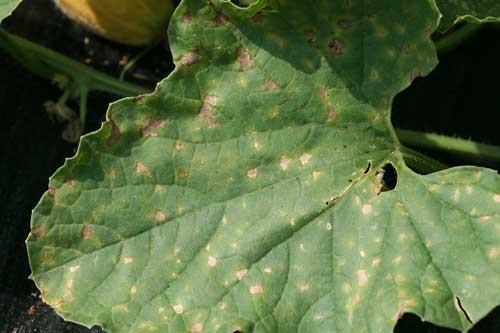
The leaf spots caused by downy mildew are yellow, angular, and restricted between the leaf veins. The interior part of the lesions often eventually turns brown. When the leaves are wet the white-gray fungus can often be seen in the lesions on the undersides of the leaves. |
|
The 'Marketmore' cucumbers were also infected but the disease has not progressed as rapidly as it did in the 'National Pickling' variety. |
|
A row of peppers (untouched by the cucurbit disease) separates the cucumbers from the melons. |
Cantaloupes:
|
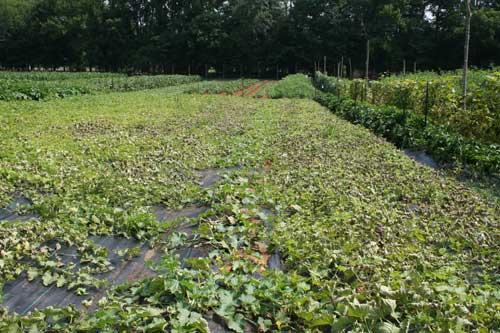
There was a sudden onset of symptoms in the 'Sweet Granite' cantaloupes during the second week of harvest - the field above looked fine on Saturday and by Monday all the rows were affected. |
|
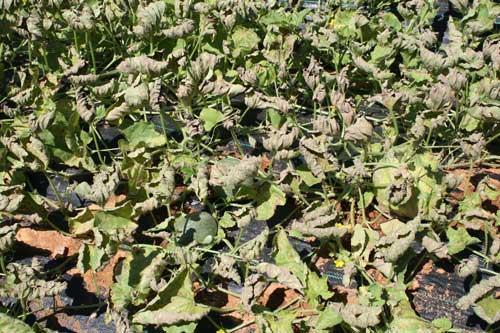
Downy mildew can cause leaf curling in melons. |
|
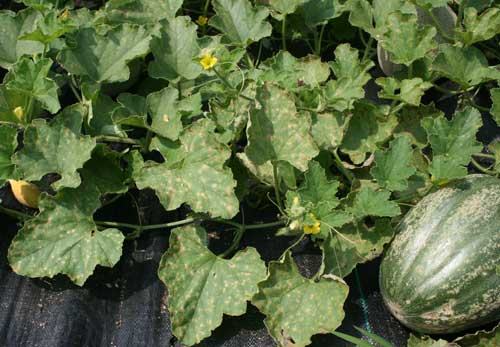
Infected melon leaves. |
* These recommendations apply only to North Carolina. They may not be appropriate for conditions in other states and may not comply with laws and regulations outside of North Carolina. Certified organic growers should consult their certifier before using a new pesticide. Unless otherwise noted, these recommendations were current as of Jule 2009. Individuals who use pesticides are responsible for ensuring that the intended use complies with current regulations and conforms to the product label. Be sure to obtain current information about usage regulations and examine a current product label before applying any pesticide. For assistance, contact your county Cooperative Extension Service agent. The use of brand names and any mention or listing of commercial products or services in the publication does not imply endorsement by the North Carolina Cooperative Extension Service nor discrimination against similar products or services not mentioned.
This page last updated January 9, 2011.