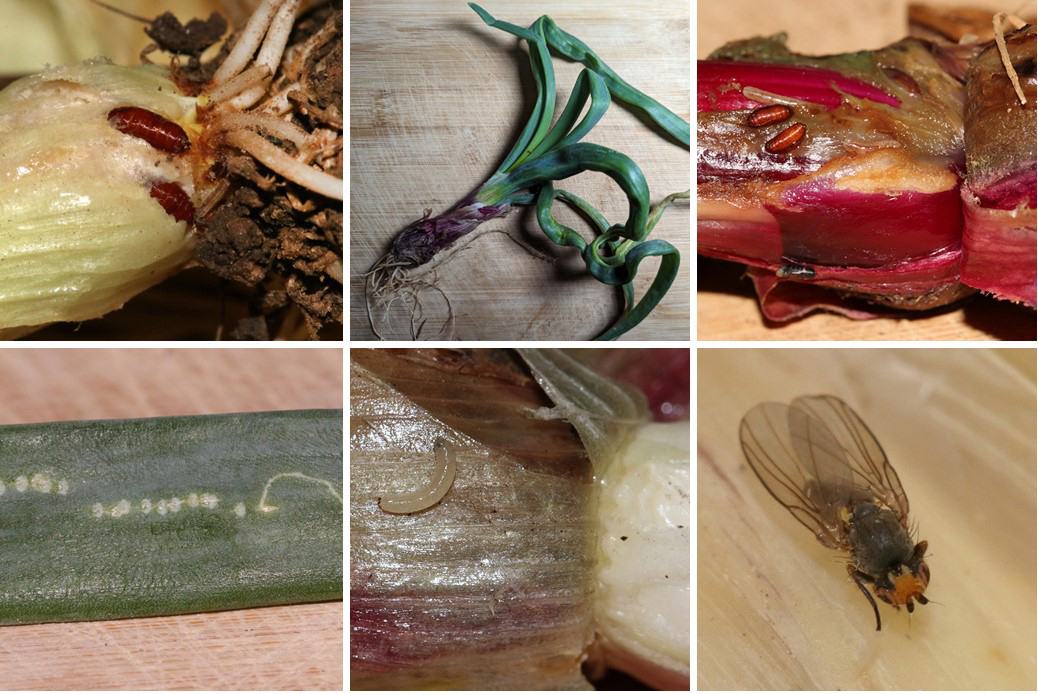
Last spring some growers in the North Carolina piedmont noticed unusual problems with their allium crops, primarily bulb onions, leeks, and garlic. Obvious above-ground symptoms included twisted/distorted leaves, stunted plants, and even plant death. Below ground, brown pupae were found infesting the plants and upon close inspection larvae were seen feeding inside the leaves and bulbs.
It turns out the culprit was the allium leafminer (ALM) which is a new pest in North Carolina. The allium leafminer fly (Phytomyza gymnostoma) is an invasive insect pest from Europe that was first detected in the northeastern U.S. in 2015 and has now spread to a few other states. It was first detected in North Carolina in 2023.
I had a crash course in the allium leafminer last spring - collecting samples at area farms, dissecting them to look for tiny larvae and pupae, and taking photos. I also read all I could about this pest and talked with specialists at Cornell University about their experience with ALM over the past eight years.
I created a web page with photos and lots of information that I will keep updated as we learn more about the allium leafminer here in North Carolina. This tiny little fly unfortunately has caused serious problems especially for organic growers in the northeast so we need to take it seriously!
Early spring is the time to be on the lookout for the allium leafminer, as flies could start emerging here as early as February, we are not sure (they start laying eggs in March in New York). My web page discusses control strategies for the allium leafminer.